Tuesday, February 28, 2012

Chicago Program Urban Studies students build community in a Peace Circle

I was fortunate to be a part of a Peace Circle with the Chicago Program Urban Studies students this semester.  Peace Circles are a way of talking together in which all of us:   are respected and treated equally; have the opportunity to speak without interruption; tell our own stories; speak and listen in a deeper more heartfelt way.  

Restorative justice groups such as Project NIA use peace circles to provide a space for at-risk and previously incarcerated youth to express their voices, and to educate youth about accountability and conflict resolution.  Chicago Public Schools use peacekeeping circles to solve conflict and avoid suspensions. 

Our circle helped us get to know each other as we shared songs and stories about ourselves.  Cheryl Graves, our circle facilitator, passed around a talking piece.  When you have the talking piece, only you are allowed to speak.  One of the talking pieces Cheryl presented were a pair of seashells that she brought back from Jamaica.  One seashell was polished and one had just been taken from the sea, and was not yet polished.  The question put to us was “Who polished you?  Who inspired you to become the polished person you are today?”  The “magic” shells brought out tears, and laughter as we each shared stories of our personal heroes and heroines. 


We then went on to create a list of peacekeeping words:  our values, rules, words that are important to each of us as we learn to build community together as roommates, as part of the program, as citizens of Chicago.  It was a session I won’t soon forget.  Thanks, Cheryl.

“Don’t ask what the world needs. Ask what makes you come alive, and go do it. Because what the world needs is people who have come alive.”

 Howard Thurman
American Theologian, Clergyman and Activist

A great quote shared with us by Cheryl Graves, Director of Community Justice for Youth Institute and facilitator of our Peace Circle.

Thursday, February 23, 2012

Improv 101 teaches us life skills


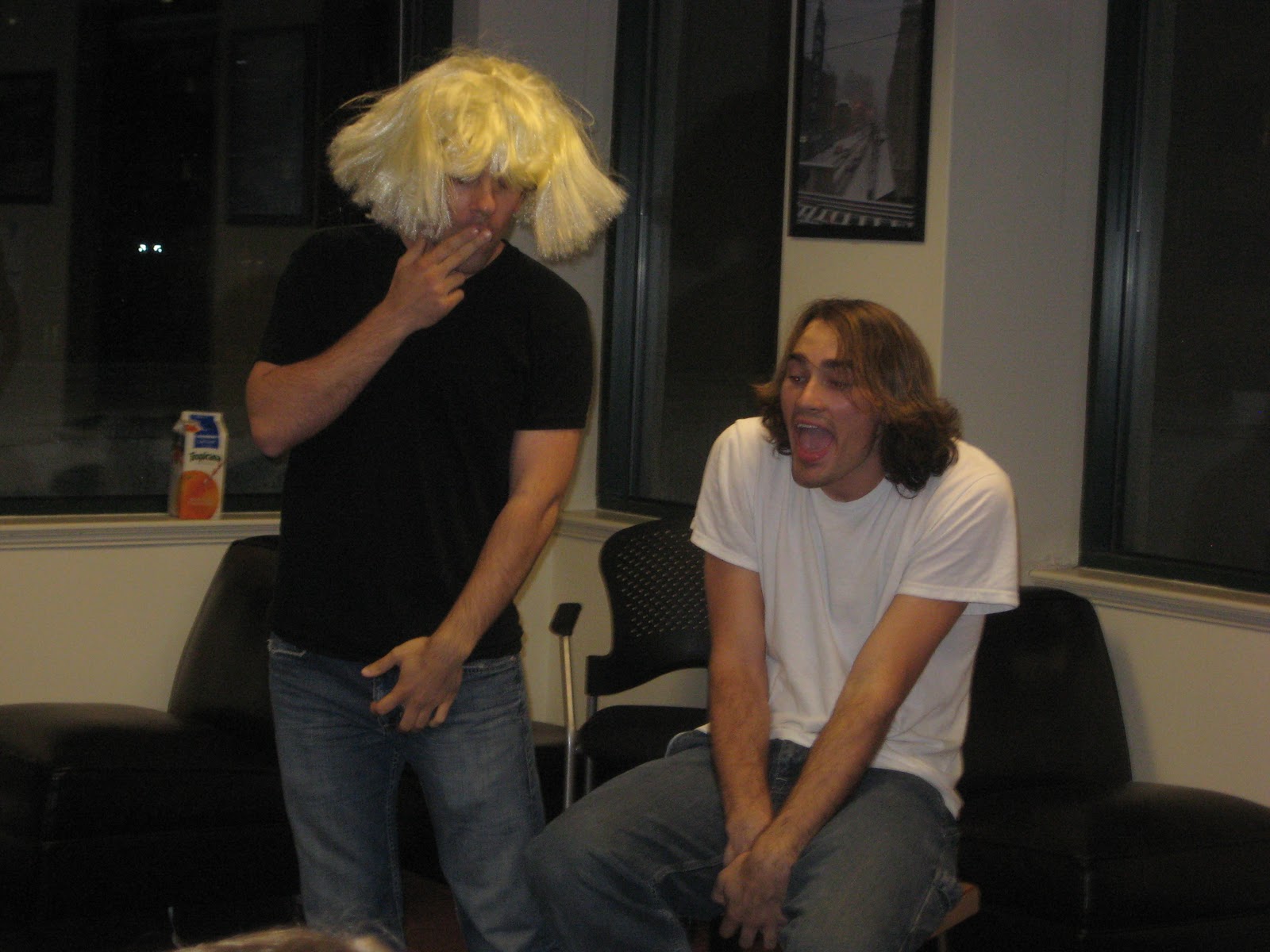
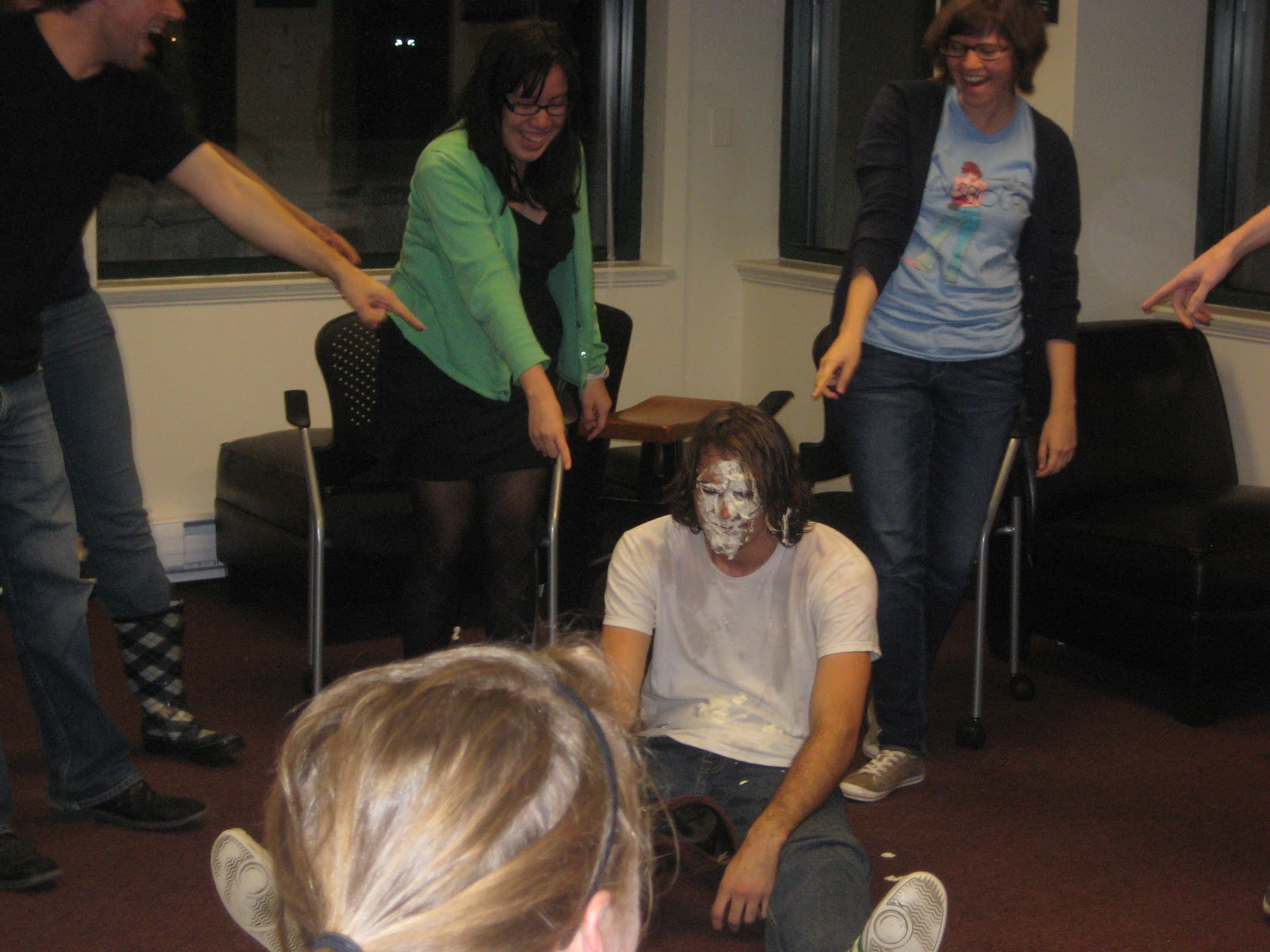
“Don’t think, just speak.  If you’re sitting on the fence, jump off,” Jason Shotts instructed Chicago Program students.  Shotts, instructor and member of the iO Theater, led Chicago Program students through exercises and games into the hilarious world of improv!  We learned the basics, all the while increasing spontaneity and becoming funny!  And, we learned more and more about each other! 

Skills learned in improv can help us in future jobs as employees and employers.  You learn to go with your gut, to react quickly, and to take risks.  There is an inherent understanding that mistakes will be tolerated.   Improv helps us to accept and cooperate with each other, to listen, to build on another’s actions and ideas, all the while supporting each other to be successful.  “The magic of improv is it nurtures us as creative, connected human beings..”  (Terrill Fischer)
                                                         
Thanks for a terrific session, Jason.

Alderman Joe Moore meets Ben Joravsky, political reporter for the Chicago Reader!


CP students were treated to a rare and lively debate between Alderman Joe Moore and political reporter Ben Joravsky at the Chicago Program office on Friday.  Students asked pointed questions about G8/NATO, TIFs and why Chicago still doesn’t have a city-wide recycling program.  Other topics included the closing of libraries, length of the school day, participatory budgeting, and the decriminalization of marijuana.  Alderman Moore was articulate and gracious, and Joravsky is even funnier in person!  Joravsky shared his experience on the Bleader.


Friday, February 17, 2012

Is the glass half empty or half full?


We are all half empty and half full, Jody Kretzmann told Chicago Program students.  We all have talents and skills that make our glass half full.  And we also have an empty part of the glass, our problems, challenges, things we need to work on.  It’s much more important to put your focus on the part of the glass that’s full, Jody said. 

Jody is founder and Co-Director of the Asset-Based Community Development Institute at Northwestern University.  He has been working at the forefront of a movement to re-focus community development efforts in the U.S. and around the world. 

Jody teaches others how to direct their focus on the assets of a community, rather than on what is broken.  “What would you learn if you studied success in unlikely places,” Jody challenged CP students.  He talked about his three and a half year trip across the country visiting burned out, run down, crime ridden, devastated neighborhoods and the amazing hope stories he found in the most unlikely places. 

Think of residents as having gifts, Jody said.   Concentrate on their talents, skills, what they can do.  Don’t ask what are the problems in a community, ask what’s working.. what’s succeeding.. what’s going on here that’s giving people hope.  You start with what you have and build up from there.

Thursday, February 16, 2012

Spike Lee in Chicago!


First week in Chicago, CP students were treated to a talk and Q&A with Spike Lee, Film Producer, Actor and Director of films Malcolm X, 4 Little Girls and Do the Right Thing. 


Mr. Lee shared his perspectives on various topics at Chicago State University February 8.  Lee talked about his background; his education, and how he got into filmmaking. He stressed the importance of education, and encouraged students to follow their dreams, and not to choose a career solely based on how much money they could earn.   

Friday, February 10, 2012

Welcome to Chicago!

This semester we have 29 students from 15 campuses joining us in the Windy City!  Sunday was move in day for 22 of them.  Weather was mild, a nice change from last February’s 22 inches of snow on the ground on opening day. 

Geography on Opening Day
An icebreaker on opening day revealed that students traveled to Illinois from eight other states: Wisconsin, Indiana, Minnesota, Michigan, Ohio, Colorado, Alabama and Hawaii.. and from as far away as China! 


Getting around Chicago
First day we’re traveling on trains and buses to the north, south and west sides of Chicago searching for cultural treasures.  Students visited five neighborhoods and brought back delicious ethnic food for a culinary feast!


Friday, December 2, 2011

Art & Architecture

Our assignment was to write a short critique of Frank Gehry’s  Pritzker Pavilion in Millennium Park.   As we approach the Pritzker Pavillion, we are instructed to take in the city skyline, and how the pavilion relates to the other buildings.  Behind the Pavillion, we can see the Aqua building (second building from the right), designed by Jeanne Gang, who was awarded a MacArthur Foundation grant this fall.  


Modern Wing of the Art Institute
Directly facing Millennium Park and the Pritzker Pavilion is Renzo Piano’s Modern Wing of the Art Institute.  
‘When Frank Gehry completed the Jay Pritzker Pavilion - a baroque swirl of steel plates enclosing a concert shell - he issued a friendly challenge [regarding the location of the Modern Wing].   ‘Come and get me,’ he told Piano, who was finalizing his design. The Italian did just that, exploiting the rigorous street grid to align his concourse on the pavilion, counterpointing Gehry’s exuberance with his cool rationality. ‘He works in his language, I with mine, but the two projects do a similar job,’ says Piano. ‘He created an acoustical space and we created a visual space protected from the sun.’ “ http://www.architectural-review.com/buildings/art-institute-of-chicago-by-renzo-piano-building-workshop-chicago-usa/8601035.article
We cross the Nichols Bridgeway, also designed by Piano, which joins Millennium Park to the Art Institute's Modern Wing.   We stop to take photos at Anish Kapoor’s Cloud Gate, aka “The Bean,” also in Millennium Park.  The Bean is one of the most popular (and most often photographed) sculptures in Chicago.


Friday, October 14, 2011

The Show That the Art Students Neglected to Name Because They Were so Busy Rehearsing

Inspired by a recent visit to a Neo-Futurist Performance of  “Too Much Light Makes The Baby Go Blind,” Chicago Program students created their own 2 minute plays in the Neo-Futurist style.    “The single unifying element of these plays is that they are performed from a perspective of absolute honesty.”   http://www.neofuturists.org/index.php?option=com_content&task=view&id=20&Itemid=45

Our wonderful colleagues created true stories about Chicago, growing up, love, sororities, critics, friends and no friends, orange juice, sock puppets, pigeons and fish.  We laughed, we cried, we gagged, we laughed some more.  Our colleagues entertained us with comedy, tragedy, the morbid, and the gross.  Truly inspiring!  Awesome job, Arts students!


The economy is driving people who are not homeless to our door

“The economy is driving people who are not homeless to our door,” said Jim LoBianco, director of Chicago StreetWise Magazine.  Chicago Program students met with LoBianco at the new StreetWise location in Uptown.  StreetWise ,  the oldest street newspaper in North America, started 20 years ago.  It’s mission is to help people help themselves to self-sufficiency through gainful employment.   Vendors purchase the magazine for $.90 and sell it for $2 -- the profit of $1.10 goes directly to the vendor.   Content of the magazine focuses on social justice issues, poverty and homelessness. 

The newspaper started as an enterprise for the homeless only.    However, more and more the program is helping those facing homelessness due to loss of employment, or loss of income.   
Streetwise has 200 vendors, and actively recruits panhandlers to join the program.  Each vendor abides by a code of conduct.  He/she establishes two or three personal goals, and goals are tracked.  Most vendors can afford to pay for a room within a couple of weeks.  Sixty percent of the vendors are in the program short term, from nine months to three years, as they move on to other employment opportunities.  
The program provides direct support  to social service programs that help clients overcome barriers that contribute to unemployment and homelessness, such as workforce development, housing/shelter and medical care http://streetwise.org/2011/10/social-service-support/ .
Of the 40 percent that remain n the program long term, 10 percent are physically challenged and 30 percent sell StreetWise as a means of extra income.  These vendors are all in stable housing; StreetWise will not enable homeless living.

Louder than a Bomb


Every year, more than 600 teenagers from over 60 Chicago area schools gather for the world’s largest youth poetry slam, a competition known as "Louder Than a Bomb".   Founded in 2001, Louder Than a Bomb is the only event of its kind in the country—a youth poetry slam, http://youngchicagoauthors.org/performances.html
The structure of Louder than a Bomb requires kids to work together in teams, presenting, critiquing, and rewriting their pieces, as opposed to focusing on individual performances.  To succeed, teams have to create an environment of mutual trust and support. For many kids, being a part of such an environment is life-changing.

Chicago Program students viewed the passionate and inspirational film, LOUDER THAN A BOMB, and then met with Lamar Jordan, one of the stars of the film.  http://www.louderthanabombfilm.com/about-the-film.php
Jordan spoke about his experiences and shared some of soulful and inspirational poetry.